
Hand Tied vs Machine Wefts: Pros, Cons and New Trends
Learn the basic differences between hand tied and machine wefts, as well as new product types for these sew-in hair extensions.
There’s a lot of talk these days about whether AI-powered robots are coming for our jobs. In the hair extension world, the machines are already here, and a lot of stylists are kind of into it. Machine wefts used to be the budget pick. Now some of them are giving hand-tied wefts a real run for their money.
If you’re new to wefts, let’s start with the basics. Hand-tied and machine wefts are both sew-in extensions. Your stylist creates an anchor in your natural hair, usually a row of small beads or a braid, and then sews the weft onto it. That’s different from tape-ins (which use adhesive), bonded or K-tip extensions (attached to small strands with keratin), and clip-ins (which you put in and take out yourself).
The main difference between hand-tied and machine wefts comes down to how the hair is attached to the weft itself.
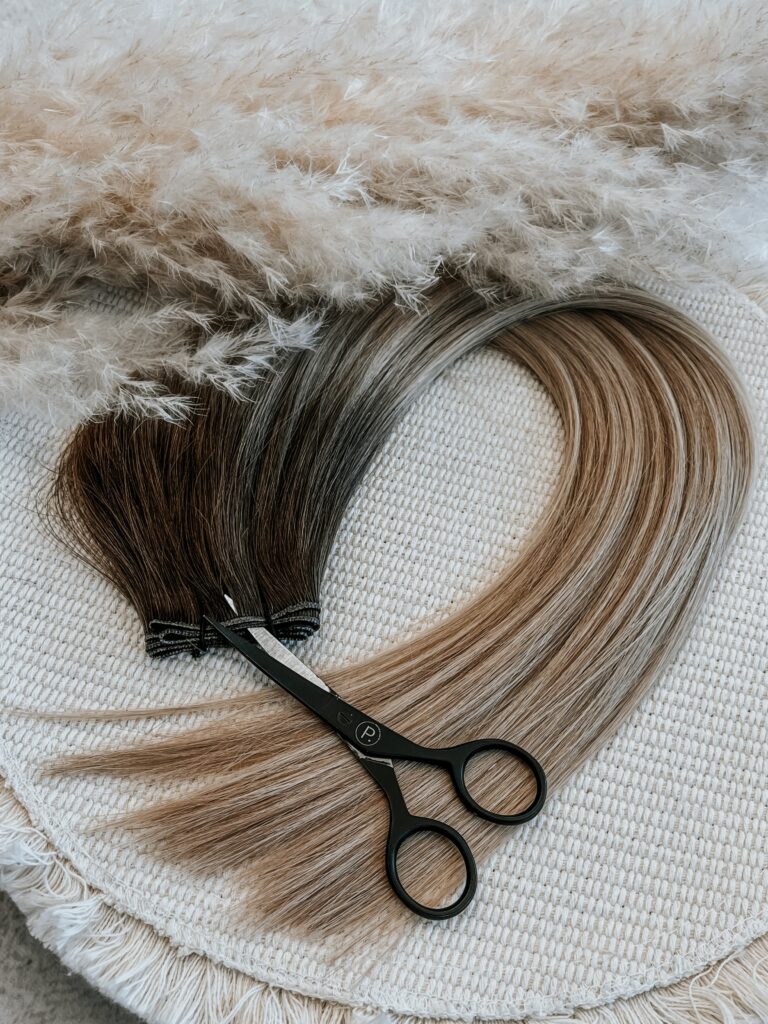
- Hand-tied wefts are made by technicians who knot the hair onto a thread by hand. The result is a very thin, flexible weft.
- Machine wefts are stitched onto a track with a sewing machine. They’re faster to make and usually cost less.
Hand-tied wefts have long been the premium choice, but that comparison was based on traditional machine wefts. Before getting to the newer kind, here’s how the classic matchup stacks up.
Hand Tied vs Machine Wefts: Pros & Cons
There are several notable differences between hand-tied wefts and traditional machine wefts.
The Look
- The hand-tied weft is thin and flat. The weft lies close to the head. It hides well under fine or thin hair. The hand-tied weft is good for natural movement and parting.
- A traditional machine weft has a thicker seam at the top that creates a visible ridge or bump. It’s harder to blend with fine hair.
Comfort
- A hand-tied weft is flexible and the weft bends with the curve of the head. It feels lighter and creates less pressure along the row.
- A traditional machine weft is stiffer. Its track can feel bulky or rigid, especially when you’re sleeping or wearing your hair up.v
Cost
- Each hand-tied weft is made by hand and takes more labor, so they have traditionally cost more.
- A traditional machine weft costs less and is easier to find. This often makes machine wefts appealing for budget-conscious clients or first-timers.
Durability and Maintenance
- A hand-tied weft can’t be cut to width without unraveling, so stylists stack wefts to fit. Knots can loosen over time and shed if handled roughly.
- The reinforced stitching holds up well on a traditional machine weft. It can be cut to fit any section, but the return hair (hair folded back at the seam) adds bulk.
- Both Holland-tied wefts and traditional machine wefts need regular move-ups as natural hair grows out.
Here’s the takeaway: the hand-tied weft wins on look and comfort, traditional machine weft wins on price and cuttability.
Hybrid and Genius Wefts
Hybrid and Genius wefts are machine wefts, but made on precision equipment that produces a very different product from traditional machine wefts. The terms “genius” and “hybrid” are basically interchangeable.
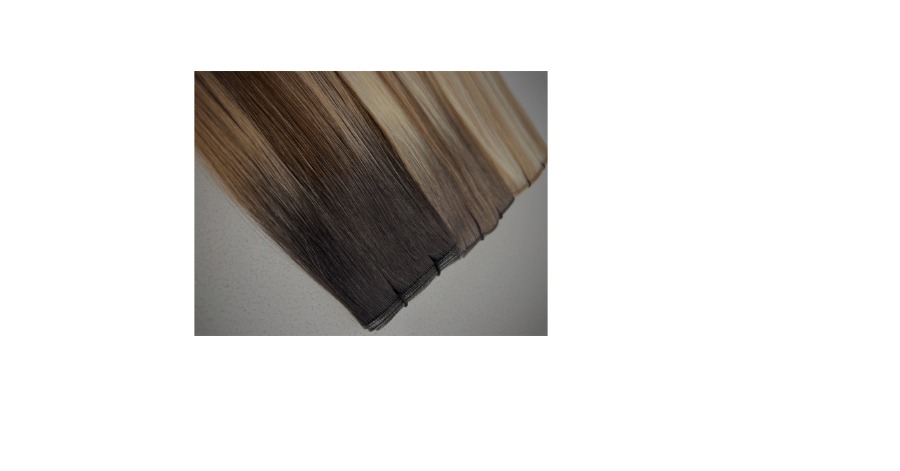
A hybrid weft has a thin, flat top that rivals or even matches a hand-tied weft. There’s little or no return hair, so there’s less bulk at the root. These wefts can be cut to custom widths without unravelling, so stylists don’t have to stack wefts. They’re also flexible enough to follow the shape of the head very closely.
The naming is confusing because the term “machine” is closely associated with traditional machine wefts, and years of marketing have taught clients that hand-tied is better than machine. Because of this, brands avoid the term “machine” and instead use “hybrid,” “genius,” or “flex.” They’re different names but the same basic idea—precision-made modern machine wefts.
Some stylists argue that hybrid wefts are better than hand-tied wefts because they are more versatile. The debate is real.
Hybrid wefts have advantages. Their custom-fit versatility is one. They also shed less at the cut edge, and they are often priced lower than hand-tied wefts. Arguments can still be made for hand-tied wefts, however. They still appeal to many stylists and clients who are used to them and like how they move.
Choosing by Hair Type
Here’s a quick guide that will help you choose hand-tied or hybrid wefts according to your hair type:
Fine or thin hair
- Hand-tied and hybrid both work well because their thin, flat tops hide better under thin hair
- Hybrid has an edge when the head is small or sections are narrow, since it can be cut to fit instead of stacked
- Traditional machine wefts are the hardest to hide here because of the thicker seam
Medium or average density
- The most flexible hair type: any of the three weft types can blend well
- Choice comes down to budget, comfort, and how much custom fitting the stylist wants to do
Thick or coarse hair
- Natural volume hides the weft easily, so seam thickness matters less
- Hybrid or hand-tied still feel lighter and lie flatter, which helps with thick hair if the client wears hair up often
- More rows or wefts may be needed to match existing volume, so cost per weft becomes a bigger factor
Curly or textured hair
- Matching curl pattern and texture of the extension hair matters more than weft type
- Volume helps hide either weft, so hand-tied and hybrid both blend well
- Hybrid’s cuttable width can help stylists place wefts around natural curl patterns
Short or shoulder-length hair
- Needs the flattest weft possible because there’s less hair to cover the rows
- Hybrid’s custom width helps fit smaller sections near the hairline and nape
- Blending length is the bigger challenge, so stylist skill matters as much as weft choice
Fragile, damaged, or postpartum hair
- Lighter wefts and fewer attachment points under strain are the priority
- Beaded row installation spreads weight across many points, which helps either weft type
- Recommend a stylist consultation before choosing
Choosing the Right Weft
Whichever weft you choose, Portfolio. recommends beaded row installation, where wefts are sewn onto a small row of silicone-lined beads with no glue, heat, or adhesive. This spreads the weight across many attachment points, which reduces the tension on the hair. The wefts can be removed and reused at move-up appointments, which stretches your investment. Beaded rows are the gold standard installation for premium wefts, and they work equally well with hand-tied or hybrid.
Hand-tied and hybrid wefts both deliver a thin, natural-looking result. The right weft for you depends on your hair type, your budget, and how much custom fitting is needed. Portfolio. offers both collections, so clients and stylists never have to compromise on product.
Shop hand-tied and hybrid collections or find a trained stylist.